Jeanette Chan on career, leadership and why women need to be more ambitious and confident to step up to CXO roles
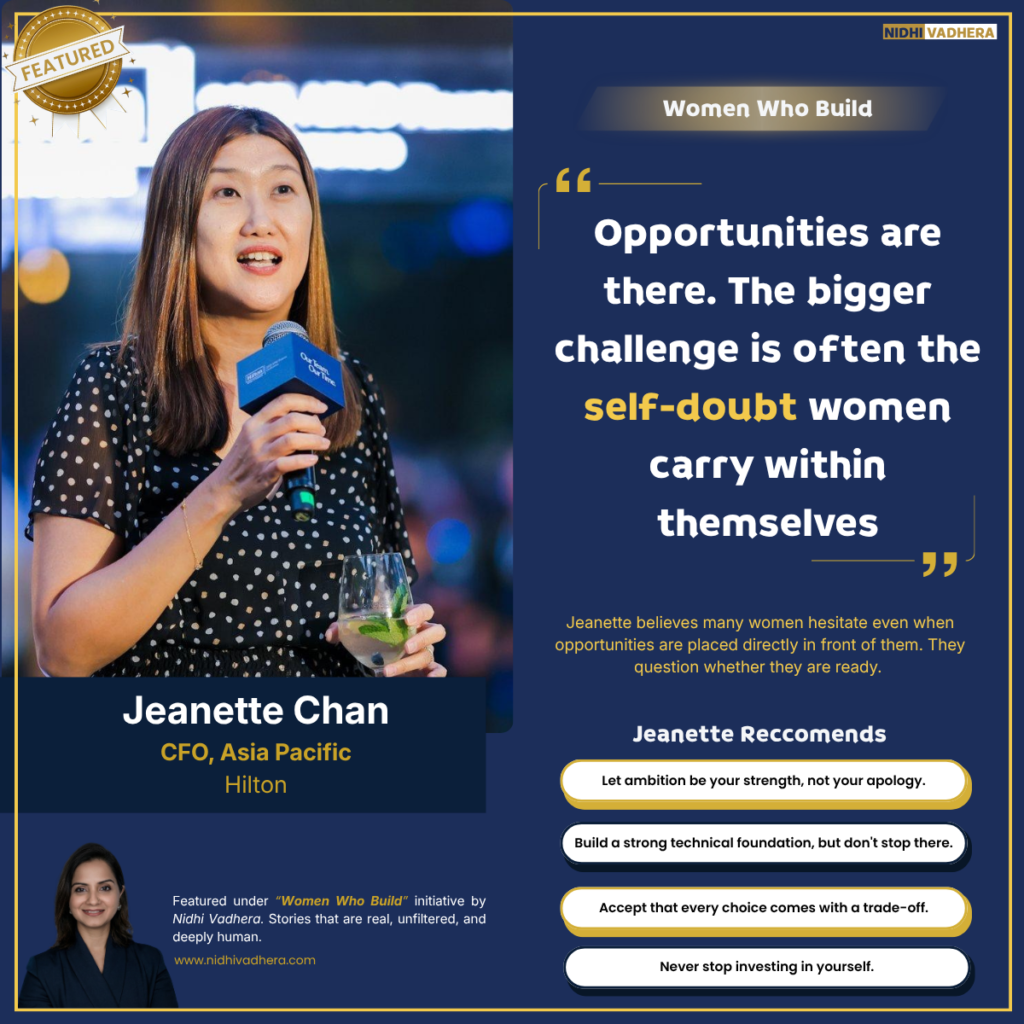
Jeanette Chan
CFO, Asia-Pacific, Hilton
Industry: Hospitality
Location: Singapore
Jeanette Chan is the Chief Financial Officer, Asia Pacific at Hilton, with over three decades of global leadership experience spanning finance, hotel development, investments, mergers & acquisitions, and strategic business transformation. A respected corporate leader, she has built an exceptional career by combining financial acumen with people-centric leadership, driving growth across some of the world’s leading hospitality brands. An alumna of Nanyang Technological University, Jeanette is equally passionate about mentoring the next generation of women leaders, championing diversity, executive development, and creating pathways for more women to step confidently into the C-suite.
When we celebrate women who reach the highest levels of corporate leadership, we often admire the destination. Chief Financial Officer. Global Leader. Board Member. From the outside, these titles represent success. Years of hard work distilled into a designation that commands respect. But titles have a curious way of hiding the most important part of the story. They don’t tell us about the little girl who first dared to dream. They don’t reveal the people who quietly believed in her before the world did. They don’t speak about the difficult choices, the sacrifices, the moments of self-doubt, or the courage it takes to keep choosing ambition when life repeatedly asks you to compromise.
Perhaps that’s why I was looking forward to interacting with Jeanette Chan, CFO of Hilton Asia Pacific. I wanted to understand the woman behind the title. What I discovered wasn’t simply the story of a finance leader who rose through the ranks of one of the world’s largest hospitality companies. It was the story of a little girl who never learnt to put limits on her dreams.
Jeanette grew up in a middle-class family in Singapore, where education was considered important, but opportunity was never measured by gender. While many young girls of her generation were subtly taught to prioritise family over career, Jeanette grew up hearing a very different message at home. Her father believed that his daughter deserved the same opportunities as anyone else. He encouraged her to pursue a career, become financially independent and build a life defined by her own aspirations. There was never a conversation about whether certain professions were more suitable for women, or whether she should dream a little smaller because she was a girl. Those conversations simply never existed.
When no one teaches you to doubt your potential, you grow up believing you belong. And when you believe you belong, you stop waiting for permission to dream. That quiet confidence became the foundation of everything that followed.
After graduating from Nanyang Technological University in Singapore with a degree in Accountancy, Jeanette began her career with Price Waterhouse. For almost a decade, she immersed herself in the world of finance, mastering numbers, discipline and analytical thinking. It was an environment that sharpened her technical capabilities and laid a solid foundation for the leader she would one day become.
Yet, somewhere along the way, she realised she wanted more than spreadsheets and financial statements. She wanted to understand businesses from the inside. She wanted to work with people, build relationships, influence decisions and contribute to an industry where experiences mattered just as much as numbers.
Hospitality offered exactly that.
Leaving the comfort of a successful career in professional services wasn’t the obvious choice. But then, Jeanette had never been someone who chose the obvious path. She chose the one that allowed her to grow. It was a decision that would quietly change the course of her life.
Around the same time that Jeanette was discovering her professional identity, life was quietly writing another equally important chapter. She met her college sweetheart. Like most young couples, they dreamt about building a future together. But there was one difference. Jeanette’s dreams weren’t confined to one city or even one country. Her career was beginning to open doors that would take her across geographies, cultures and opportunities far away from home.
For many relationships, this is where compromise begins. One person’s ambition quietly becomes the other’s sacrifice. Jeanette’s story unfolded differently.
Her husband never asked her to choose between love and career. He never saw her ambition as something that competed with their relationship. Instead, he became its strongest supporter. When her work demanded a long-distance relationship, they embraced it. When international opportunities came knocking, he encouraged her to take them. Even after marriage, that unwavering support never changed. As Jeanette spoke about those years, I found myself thinking about something we rarely acknowledge when we celebrate successful women. We often applaud the woman who breaks barriers. We rarely recognise the people who quietly refuse to build barriers around her.
Behind many accomplished women is not someone standing in the spotlight. It is someone standing beside them, believing in their dreams just as deeply as they do. That support gave Jeanette the freedom to pursue opportunities without constantly questioning whether ambition came at the cost of love. It also gave her the courage to take risks.
Over the next three decades, her career took her through some of the world’s most respected hospitality brands, including Grand Hyatt, IHG and eventually Hilton. Each role stretched her in new ways. She wasn’t simply moving up the corporate ladder; she was expanding her understanding of business itself.
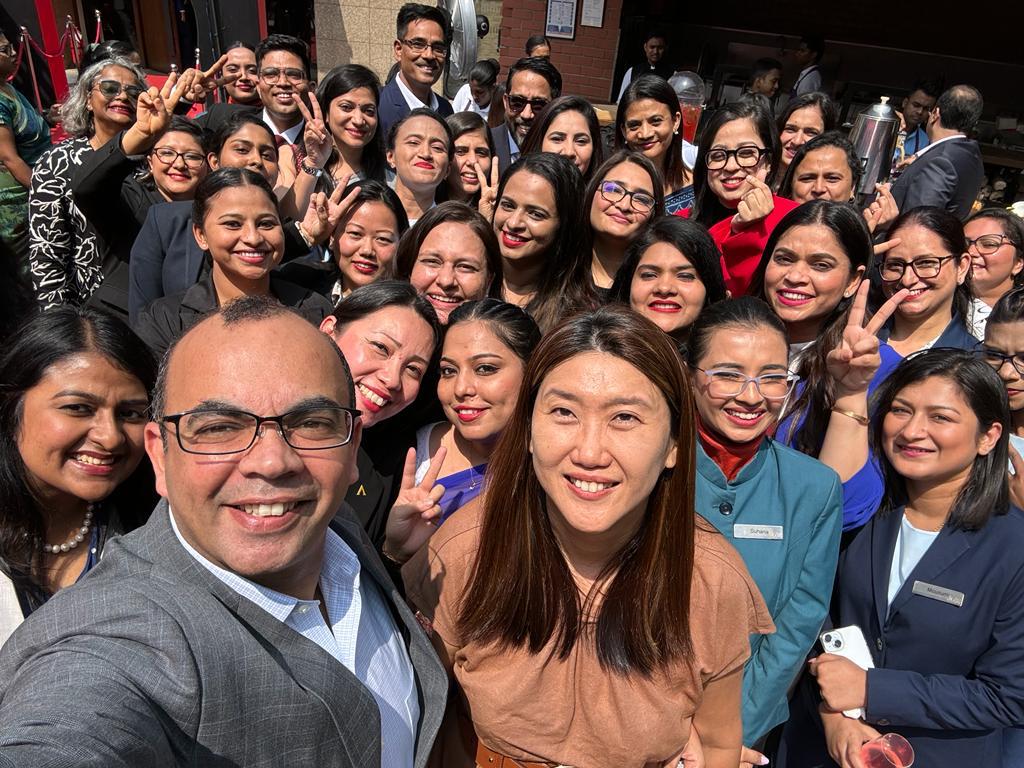
Finance, she realised, was never just about balance sheets or profit and loss statements. It was about helping hotel owners make investment decisions. Understanding markets before they shifted. Building partnerships. Influencing people. Navigating uncertainty. And ultimately, creating businesses that people believed in.
Looking back, her career appears remarkably well planned. It wasn’t. Jeanette smiled as she reflected on the many turns her journey had taken. She had simply learnt to say yes to opportunities that challenged her, even when the path ahead wasn’t completely visible. Growth, she discovered, rarely followed a straight line. It rewarded those who were willing to take the next courageous step.
But every step forward carried a price.
As Jeanette rose through the ranks of global leadership, another role became equally important to her. She became a mother. Today, her two children are adults. Yet, even now, they occasionally remind her of the parent-teacher meetings she missed, the school performances she couldn’t attend and the milestones where work demanded her presence elsewhere. She didn’t dismiss those memories. Nor did she try to justify them. Instead, she spoke about them with remarkable honesty. “The guilt never completely disappears,” she admitted. It was perhaps the most vulnerable moment of our conversation. We often celebrate women who appear to “have it all.” Jeanette gently challenged that illusion.
Every meaningful career, she believes, comes with trade-offs. As women, we have long been conditioned to believe that we must excel in every role at the same time; as professionals, mothers, wives and daughters. Somewhere along the way, perfection quietly became the standard we set for ourselves. Jeanette no longer believes in that standard. She wished she could have been present for more family moments. She acknowledged the choices she had made, accepted the imperfections they had brought, and learnt to move forward without allowing guilt to define her. Then she smiled and said something that stayed with me long after our conversation had ended. “You take it with a pinch of salt.” It wasn’t resignation. It was wisdom. The wisdom to understand that no life is perfect. Only purposeful.
As I listened to Jeanette speak about her three decade journey, one thing became abundantly clear. The woman who leads today wasn’t the same woman who began her career. She had consciously rebuilt herself along the way. Like many high performing finance professionals, Jeanette started her career believing that excellence was enough. If she worked harder than everyone else, delivered exceptional results and mastered every technical aspect of her role, success would naturally follow.
For a while, it did. Her expertise earned her promotions. Her discipline earned her credibility. Her analytical mind earned her respect. But as she stepped into larger leadership roles, she encountered a reality that no finance textbook had prepared her for.
People don’t follow expertise. They follow leaders! “I realised technical skills could only take me so far,” she reflected. “The higher you grow, the less your success depends on what you know and the more it depends on how well you lead people.” It was a lesson that fundamentally changed the way she approached leadership. The numbers hadn’t changed. She had.
Jeanette began investing in a completely different set of skills. She learnt to listen before speaking. To influence instead of instruct. To negotiate with empathy. To navigate difficult conversations with maturity. To resolve conflicts without creating new ones. To inspire teams instead of merely managing them. She realised that leadership wasn’t about being the smartest person in the room. It was about bringing out the best in everyone else.
She believes technical expertise may open the first few doors of your career. But soft skills determine how many more doors continue to open after that. For Jeanette, learning never stopped once she reached leadership. In many ways, it became even more important. Throughout her career, she actively sought mentors who challenged her thinking, invested in executive education, read extensively and remained open to feedback, regardless of how senior her role became. She believes one of the biggest mistakes professionals make is waiting for their organisation to invest in their growth. Her philosophy is simple. Invest in yourself long before anyone else decides to invest in you.
Among all the leadership skills she spoke about, one stood out. Public speaking!
Jeanette believes too many talented professionals, particularly women, allow fear to silence their potential. They avoid presentations. Decline opportunities to address large audiences. Stay in the background because they worry about making mistakes or being judged. Her advice couldn’t have been simpler. “Keep showing up!” The first presentation may feel uncomfortable. The second may still be awkward. But confidence, she believes, is never built in isolation. It is built in front of an audience. Leadership demands visibility. And visibility demands courage.
One of the most thought provoking moments of our conversation came when we began discussing the underrepresentation of women in senior leadership. Given Jeanette’s remarkable career, I expected her to speak extensively about glass ceilings and gender bias. Instead, she challenged my assumptions. She acknowledged that biases certainly exist, but she also believes the conversation has evolved. Organisations like Hilton, she explained, have invested significantly in creating pathways for women to succeed. Leadership development programmes, mentoring initiatives, sponsorship opportunities and inclusive policies are no longer exceptions; they are becoming an integral part of how progressive organisations build future leaders.
She also spoke warmly about the many male colleagues who had supported women throughout her career. Then she paused before saying something that has stayed with me ever since. “The opportunities are there. The bigger challenge is often the self-doubt women carry within themselves.” It was a perspective I hadn’t expected.
Jeanette believes many women hesitate even when opportunities are placed directly in front of them. They question whether they are ready. Whether they can manage greater responsibility. Whether they can balance leadership with family. Whether they truly deserve the role. That hesitation, she explained, creates uncertainty.
From an organisation’s perspective, leadership is a long-term investment. Companies naturally place greater confidence in individuals who demonstrate not only competence, but conviction in their own ability to lead. “So how do we change that?” I asked. Her answer was immediate. “Encouragement.”
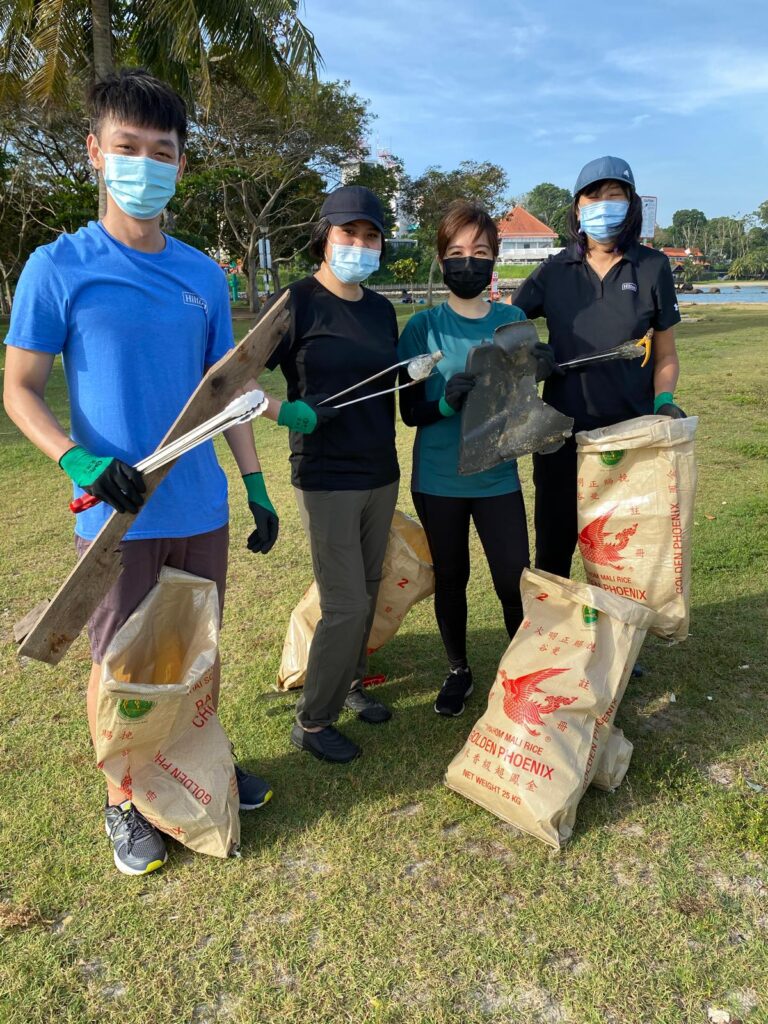
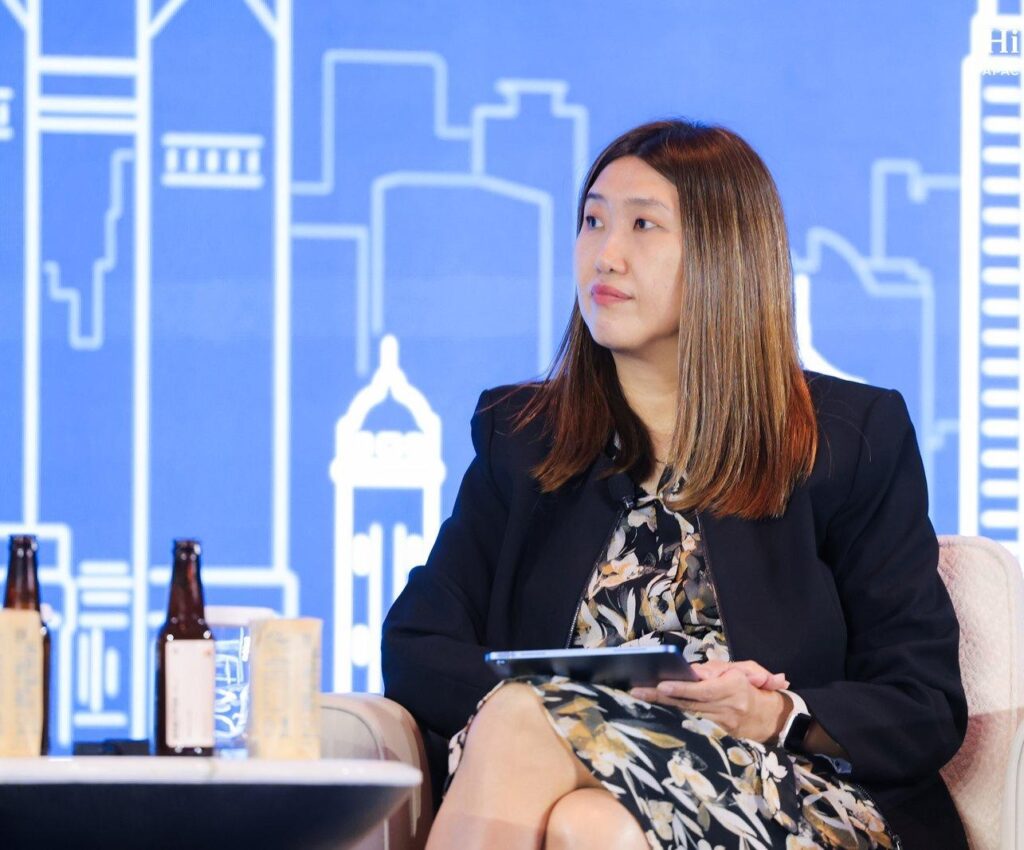
Women, she believes, thrive in environments where they feel valued, appreciated and psychologically safe. Recognition builds confidence. Confidence builds courage. Courage encourages women to stay the course, even when leadership feels overwhelming. Creating more women leaders isn’t only about opening doors. It’s about ensuring women believe they are worthy of walking through them.
As our conversation progressed, Jeanette shared one personal ritual that beautifully captured the intentional way she lives her life. Every year, around her birthday, she pauses to conduct what she calls her personal life audit. She reflects on every important dimension of her life. Her health, relationships, family, finances, learning, purpose and personal growth. She asks herself where she has flourished, where she has fallen behind and what deserves more attention in the year ahead. I found the idea beautifully simple.
We spend so much time reviewing quarterly business performance. Rarely do we review ourselves with the same honesty. Perhaps that’s why Jeanette’s leadership feels so authentic. Because she doesn’t just lead organisations. She continues to lead herself.
Leadership Lessons from Jeanette Chan’s Journey:
- Let ambition be your strength, not your apology.
- Build a strong technical foundation, but don’t stop there.
- Invest in people skills as intentionally as you invest in professional skills.
- Find people who believe in your dreams.
- Accept that every choice comes with a trade-off.
- Never stop investing in yourself.
- Learn to speak before you’re ready.
- Audit your life, not just your career.
- Don’t wait for confidence to appear. Be willing to grow into the opportunity.
As our conversation came to a close, I found myself thinking less about the boardrooms Jeanette had led and more about the little girl she once was. A little girl growing up in a middle class home in Singapore. A father who never told her that certain dreams belonged to men. A husband who never asked her to choose between love and ambition. A leader who spent decades learning that success isn’t measured by how much you know, but by how many people you inspire along the way.
Perhaps that is Jeanette Chan’s greatest legacy. Not that she became the senior leader of one of the world’s largest hospitality companies. Not that she led teams across continents. Not even that she broke barriers in rooms where few women had walked before.
Her greatest legacy is the belief she is leaving behind. That women do not have to apologise for ambition. That competence is only the beginning. It must be accompanied by continuous learning, strong mentors, emotional intelligence, the courage to speak up, and the confidence to lead with authenticity. That leadership is not a destination we arrive at, but a commitment to keep growing, every single day.
Jeanette believes organisations have already begun creating more opportunities for women. The next shift, she says, must happen within us. Women need encouragement. They need environments where they feel seen, valued and trusted. More importantly, they need to stop waiting until they feel completely ready. “Confidence rarely comes first. Courage does.”
After talking to Jeanette, I realised that every defining chapter of her life was shaped by one decision and that was to say yes before certainty arrived. To embrace opportunities before she had all the answers. To continue investing in herself, even after reaching the top. And perhaps that’s the lesson every aspiring leader can take away from her story. Dream boldly. Build your competence relentlessly. Lead with empathy. Keep learning. Keep showing up. And when life offers you a seat at the table, don’t spend so much time wondering whether you belong there that someone else occupies the chair.
Take your seat!
If you are inspired by Jeanette’s story, connect with her on Linkedin
Blog By: Nidhi Vadhera
Startup Strategist | Investor | Author (Romancing Targets)
Connect with Nidhi On LinkedIn
Disclaimer: This blog is based on an interview conducted by Nidhi Vadhera with Jeanette Chan and on the details shared during the discussion.